
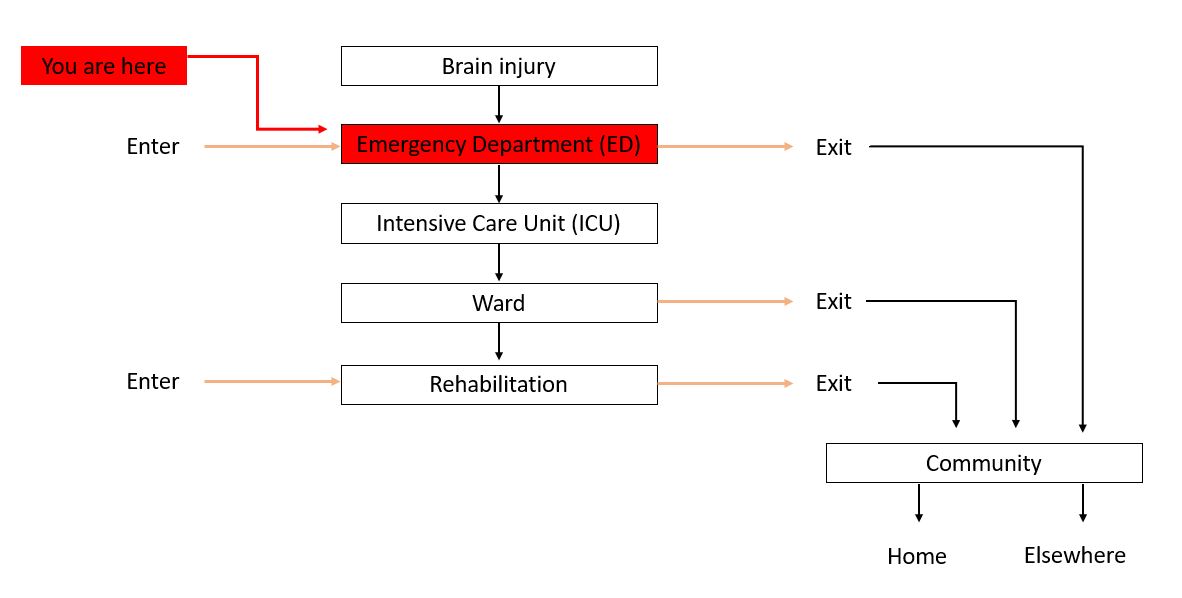
The Emergency Department (ED), sometimes called the ER (Emergency Room) is a special part of the hospital where where doctors, nurses and other healthcare workers help people who are sick or hurt and need immediate care.
What happens when your special person arrives?
- Check-In: When people arrive, they will give their name and explain why they’re there.
- Triage: A nurse will quickly check how serious the problem is. They’ll ask questions, check the person’s temperature, pulse, or blood pressure, and decide how soon they need to see a doctor. People with life-threatening problems are treated first, even if others arrived earlier.
- Waiting Area: Sometimes the person will wait before seeing a doctor. This can feel frustrating, but it’s because they’re helping someone with a more urgent need.
- Treatment: When it’s your special person’s turn, they’ll go to a room or area where a doctor or nurse will check them and decide the best treatment, like X-rays, tests, or medicine.
Why does it take time?
The ED can be very busy. Some people need more time or special equipment to treat them. The staff is working hard to help everyone as fast and safely as they can.
How can you stay calm?
- Bring something to do, like a book, music, or games on your phone.
- Take deep breaths if you feel anxious.
- Ask questions! The nurses and doctors are there to help you understand what’s happening.
After the visit
Your special person might go home with instructions for care, or need to stay in the hospital. Make sure your special person follows any advice and ask questions if you’re there and unsure about something.
From the ED, your special person may need to have an operation or move to the Intensive Care Unit.
Operations
Sometimes, doctors need to perform an operation (also called surgery) to help treat the injury and give the brain the best chance to heal. Here’s what you need to know about brain injury surgeries and how they help.
Why do some brain injuries need operations?
The brain is a super important organ – it controls everything your body does, like thinking, moving, and breathing. If it’s hurt, doctors might need to do surgery to:
- Remove pressure: Injuries can cause swelling or bleeding inside the skull, which can press on the brain. Surgery helps relieve that pressure.
- Stop bleeding: Blood vessels in the brain can break during an injury. Surgery can stop bleeding and prevent more damage.
- Fix skull fractures: If the bones of the skull are damaged, they might need to be repaired to protect the brain.
- Remove blood clots: These are clumps of blood that form after bleeding inside the brain. Surgery can remove them so the brain can function better.
Types of brain injury surgeries
Here are some common types of surgeries that might be done:
- Craniotomy: A small part of the skull is removed so the surgeon can work on the brain. The bone is usually put back after the surgery.
- Craniectomy: Similar to a craniotomy, but the piece of skull isn’t put back right away. This might be done to allow the brain to swell safely.
- Burr hole surgery: Tiny holes are drilled into the skull to drain fluid or relieve pressure.
- Shunt placement: A tube is placed in the brain to drain extra fluid, especially if there’s swelling.
- Skull repair: If the skull is fractured, doctors may fix or replace the broken parts with a metal or plastic plate.
What happens before and after surgery?
- Before surgery: Doctors will explain the plan to your special person (if awake) and your family. They might use scans like CT or MRI to see exactly what’s going on in the brain.
- After surgery: Recovery happens in the hospital. They may have their hair shaved and have a big cut on their head, closed with staples or stitches, and bandages to keep their head clean and safe from germs. Your special person might be in the ICU (Intensive Care Unit) for close monitoring. Rehabilitation (therapy to regain skills like walking or talking) is often a big part of recovery.
How you can help
- Be patient: Healing from brain surgery takes time, and progress might be slow.
- Be supportive: Just being there for your special person can make a big difference.
- Ask questions: It’s okay to ask doctors or nurses about what’s happening if you don’t understand.
It’s normal to feel worried
Seeing someone you care about go through surgery can be scary, but remember that these operations are done to help. Surgeons are highly trained to take care of brain injuries and give people the best chance at recovery.
If you want to learn more or need support, talk to a trusted adult or staff member. You’re not alone, and it’s okay to ask for help.