Your brain is a very important organ, located in your head and protected by your hard and bony skull.
For brains to work well, it needs oxygen and energy. Oxygen comes from breathing and energy comes from blood, sent around your body by your heart, through big tubes which go into your brain.
To understand our brains, we need to know what’s inside it. Your brain is made up of 100 billion tiny cells called neurons. These neurons send messages around our bodies, telling different parts what to do. Teams of neurons are called nerves and they look like wires all through your body.
Your brain gets messages from inside and outside of your body. Your eyes, ears and other senses help turn information from the outside world into signals that go to your brain. Inside your body, messages are sent to tell your brain that you are hungry, thirsty, need to sleep or are in pain.
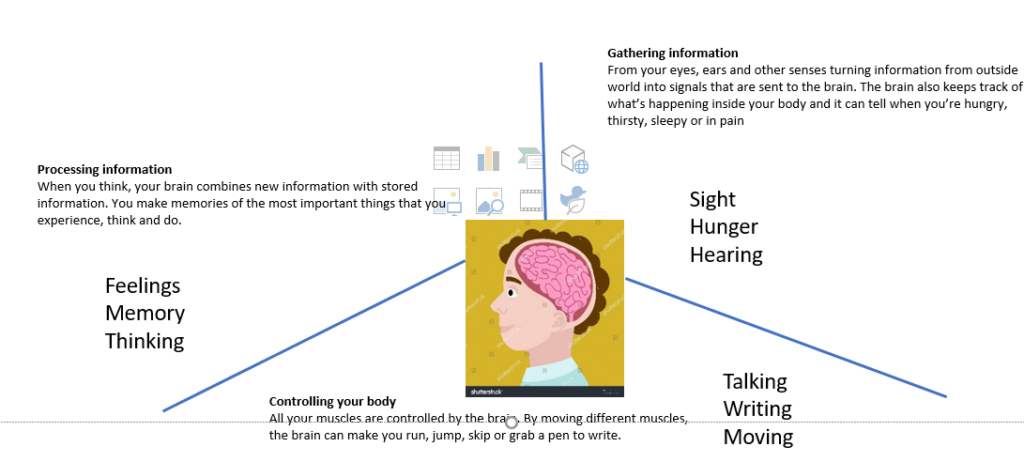
Your brain helps you to move, think, talk, see, taste, remember and feel.
Because we can’t see our brains, have you ever thought of what it looks like? Your brain looks like a large pinkish-grey walnut and it feels like a mushroom.
All brains work similarly, but the little differences between brains, along with our experiences and what we learn are what makes everyone unique and special!
Parts of the brain
Your brain has 2 halves, called hemispheres.
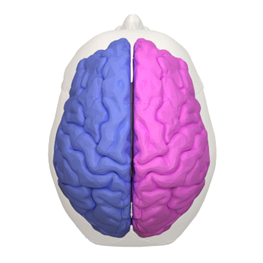
Each hemisphere controls the opposite side of your body.
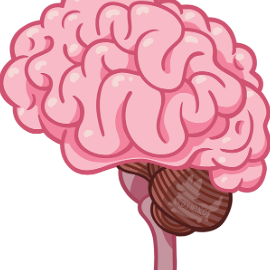
Brain Lobes
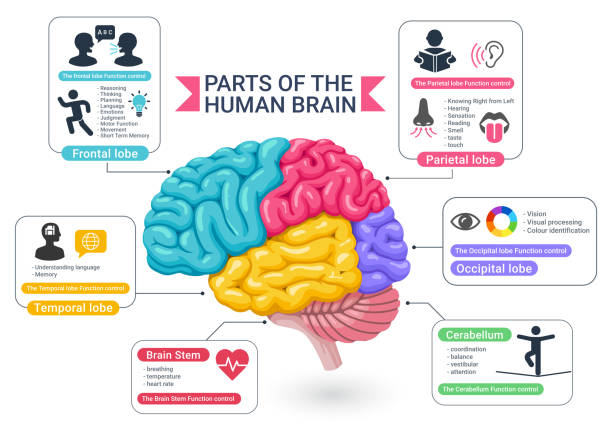
The wrinkly surface of your brain is called the cerebral cortex and is divided into four lobes.
The cerebellum and brain stem are also parts of your brain.
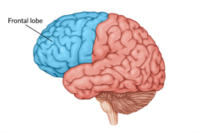
Frontal lobe
The frontal lobes are located at the front of your brain and are responsible for:
- Planning (like how you’re going to get out of bed and get ready for school)
- Problem solving (oh no, you get up and realise you don’t have any clean school uniforms, what do you need to do and how could you do it?),
- Controlling your emotions and impulses (should you get angry and scream that you don’t have a clean uniform, or could you feel frustrated for a second and move on to fixing the problem?).
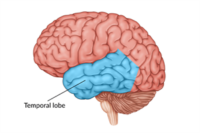
Temporal lobe
The temporal lobes are located on the sides of your brain and they help you to learn, remember and understand sounds and objects. They help you to speak, find the right words. They also help you to recognise faces. Your temporal lobes are also involved in making you the person you are (your personality) and the emotions you feel.
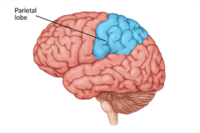
Parietal lobe
The parietal lobes are located on the top-back part of your brain and this lobe gives you meaning from all your senses – what you smell (yum, Dad’s cooking smells delicious!), what you hear (I wish my sister would be quiet!), feel (oh boy, that water is hot), taste (yummo, this sushi taste amazing!), and see (OMG, how could he step in that puddle?). Thanks to your parietal lobes, you can hold your attention in class and know where your body is in space.
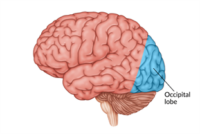
Occipital lobe
The occipital lobes are located at the very back of your brain and it helps you make sense of what you see including shapes, colour, size and distance.
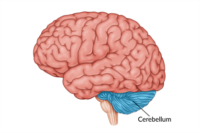
Cerebellum
The second part is the cerebellum which is called your ‘little brain’. It is located under your brain near your spinal cord. It helps you to coordinate your balance and muscles for large body movements.
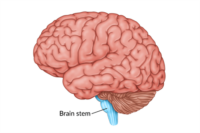
Brain stem
The third part is the brain stem which connects your brain to the spinal cord and this area controls your core functions like wakefulness, breathing, swallowing and body temperature. Have you ever thought, how am I able to breathe without thinking about it…well, your brain stem does it for you.
How do the different parts of our brain work together?
All 4 lobes work together for you to do the things you do every day.
Here’s an example of getting ready for school:
| Frontal | Temporal | Parietal | Occipital | |
| Remembering what time school starts | Y | Y | Y | Y |
| Using your watch to check the time | Y | Y | Y | Y |
| Remembering where your classroom is and how to get there | – | Y | – | – |
| Walking to your desk and sitting down | Y | Y | Y | Y |
| Recognising your friends and teacher | – | Y | Y | Y |
| Listen for your name and responding | Y | Y | – | – |
Fun Facts
How heavy are brains?
A baby’s brain weighs 400 grams. A teenager’s brain weighs the same as an adult which is approximately 1.5kg
How many neurons are in your brain?
There are over 100 billion neurons in your brain. It would take you 3,000 years to count up that high! Eek!
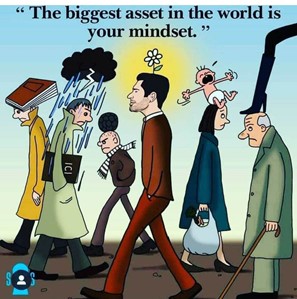
How many thoughts do you have a day?
You have about 70,000 thoughts per day. Wow, what are we always thinking about?
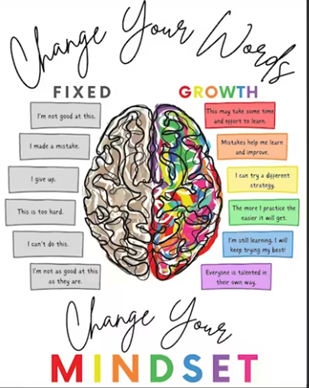
How fast can a neuron send information around your brain?
Neurons send information more than 322km/per/hour which is faster than a bullet train!
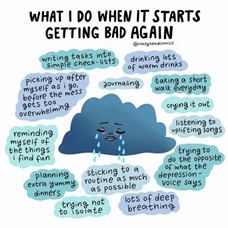
What is a ‘brain freeze’?
A brain freeze happens when you eat or drink something that’s cold and it chills the blood vessels and arteries in the back of your throat, including the ones that take blood to your brain.
What age is your brain fully developed?
Females = 23 years
Males = 25 years
What animal has the biggest brain?
A sperm while. Its brain weighs 9kg.
How many hours a day do you use your brains?
24 hours a day! It never stops working, even when you’re sleeping. For example, your brain helps you to dream and breathe when you’re asleep.
How big are our brains compared to chimpanzees?
Our brains are 3 times bigger than chimpanzee’s. No wonder we’re smarter!