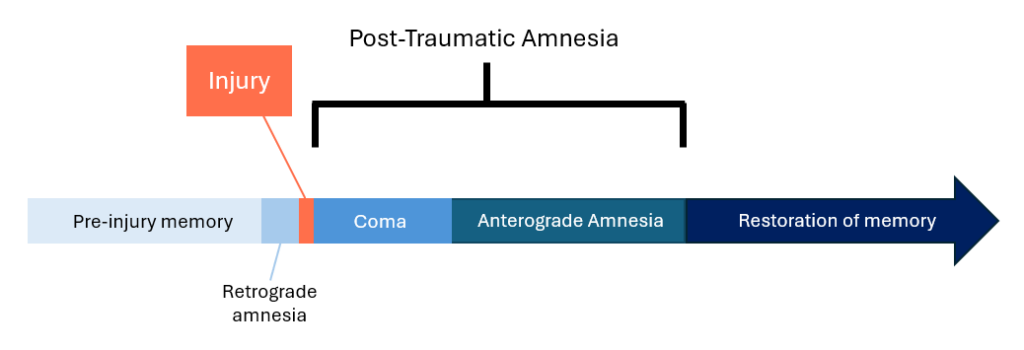
People who have a traumatic brain injury (TBI) experience a phase in their recovery called Post-Traumatic Amnesia (PTA). In this state, they are confused and disorientated, absorbing very little information from the environment. Usually, they are confused as to what has happened to them and where they are. They cannot lay down new memories and they will not remember this period afterwards, although they may have ‘islands’ of memory. Both speech and behaviour are likely to be confused, and they may display verbal aggression, agitation and restlessness.
Duration and severity
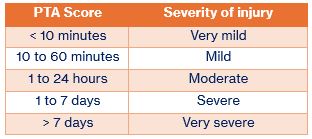
PTA may last from several minutes to several weeks, or even months, depending on the severity of the injury. The length of PTA can provide clues about the severity of injury and the nature of recovery.
Key characteristics
- Anterograde amnesia is the period after coma where there are difficulties forming new memories
- Disorientation, such as knowing where they are, what the date / time / day / month / year, or even who they, or you are, is common
- Confusion and memory loss, especially related to remembering new information and events, such as who came to visit
- Behavioural disturbances can include agitation, sexual disinhibition, irritability, anxiety, increased anger and other behavioural changes
Important considerations
- PTA is a common feature of TBI, particularly after a coma
- It’s a temporary condition and most people will eventually emerge from this state of recovery
- Rehabilitation and therapies can be helpful during and after PTA
Supporting someone in PTA
- Maintain a quiet, supportive environment, keeping noise and stimulation, including visitors, to a minimum
- It is helpful if the person is surrounded by familiar things (photographs, bedding). It is useful to provide regular reassurances regarding circumstances
- Avoid restraint as this acts to reinforce the persons fear and confusion. It is helpful if the person has the freedom to wander around their environment (ward) under supervision
- Allow frequent rest times
- Reinforce any attempts at communication and keep instructions simple. It is not helpful to correct people in PTA as they are unable to learn.