STILL TO CHANGE
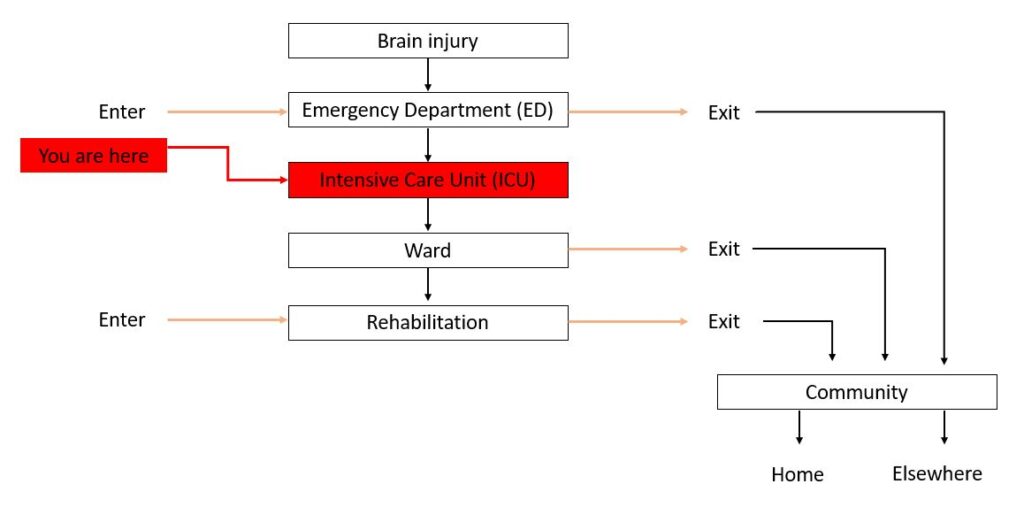
After the Emergency Department (ED), your parent may go to the Intensive Care Unit (ICU) which is a separate ward in the hospital for people to go to get special care and attention by nurses, doctors and other staff.
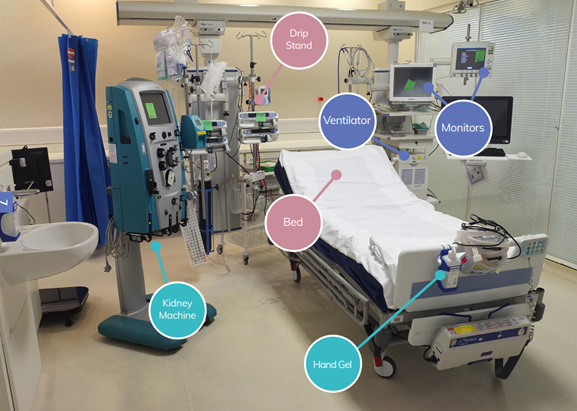
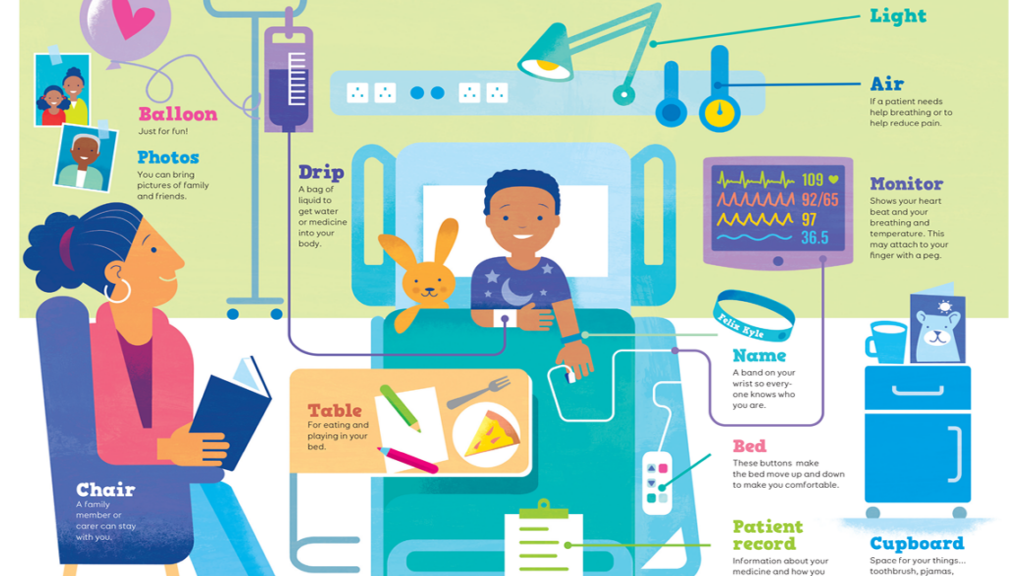
The ICU will have lots of machines connected to your parent and they will be in a special bed that can move up and down. The machines help your parent to breathe or check how quickly their heart is beating.
How long your parent may stay in the ICU depends on their injuries. It may be a few days, a few weeks, or months.
Sometimes, a parent may be put into a coma which is a deep sleep to help their brain and body to heal.
Most people wake up from a coma but some people do not.
If your parent wakes up from a coma, they may be unable to do things like talk or walk. They may not remember information like your name or what day it is.
Your parent needs time for their brain to wake up.
Different hospitals have different rules about families and children visiting the ICU. Always check with your family and the local hospital before visiting.
Before going into a hospital, it is a good idea to talk about what you may see and hear.
Your parent may not look like how you remember them. This may be a bit of a surprise to you at first. Sometimes medicines or bandages may make their face look puffy. They will be lying down in their hospital bed and may have tubes attached to different parts of their body. It is likely that your parent may not be able to talk to you. It may be beneficial for you to see a photo first.
One of the best ways you can help everyone in the hospital is to remember to wash your hand, or use special hand gel before you go into the ICU. Clean hands help germs stay out of hospital.
You may like to make something personal for your parent, and bring in when you visit or if you are not comfortable going into hospital, you can get another family member to bring it in.

Activity:
Here are some suggestions…

u003ch3u003eu003cstrongu003eWrite a card or letteru003c/strongu003eu003c/h3u003ernConsider writing down your thoughts, wishes, feelings or things you have been doing

u003ch3u003eu003cstrongu003eDraw a pictureu003c/strongu003eu003c/h3u003ernDraw a picture of your family, your pets, you and your parent doing things you love

u003ch3u003eu003cstrongu003eBring in photosu003c/strongu003eu003c/h3u003ernTake some new photos of yourself and your family, or bring in old photos

u003ch3u003eu003cstrongu003eBring in a special toyu003c/strongu003eu003c/h3u003ernLeave one of your special toys

u003ch3u003eu003cstrongu003eHold handsu003c/strongu003eu003c/h3u003ernCheck with the nurse to see if you can hold their hand

u003ch3u003eu003cstrongu003eRecord a message or songu003c/strongu003eu003c/h3u003ernRecord a message or song to play

u003ch3u003eu003cstrongu003ePrayu003c/strongu003eu003c/h3u003ernPray, if praying is part of your belief system

u003ch3u003eu003cstrongu003eAsk questionsu003c/strongu003eu003c/h3u003ernAsk your family or staff questions that you have

Questions you may like to ask:
- What happened to my special person?__________________________________________________________________
- Can I hold my special person’s hand?___________________________________________________________________
- Can my special person hear me?________________________________________________________________________
- What are the machines doing? Why do they make sounds?____________________________________________
- Who is helping my special person get better?__________________________________________________________
- What can I do to help?__________________________________________________________________________________
Questions that may be difficult for an adult to answer:
- When might my special person wake up?
- When will they come home?
- Will my special person be the same when they wake up?
- Will my special person die?
For your first visit, stay up to 15 minutes.
Have a ‘code word’ that you can use during the visit if you wish to leave at any point.
Your other parent may need the support of staff or a trusted friend when you visit. You may also choose to visit with other siblings or family members.
After you visit, spend time with an adult you trust so you can talk about your visit. You are likely to feel many, strong and frequent emotions before, during or after you visit hospital. Talking about how you feel can give you reassurance and help to ease any fears.
Some children do not like visiting hospitals and that’s ok. You may like to wait until your parent has woken up and moved to another ward. If you would not like to go to the ICU, your family can give you information about how your parent is going. It is important to ask questions, so you know the truth, rather than make up stories of what is happening in your mind.