Different tests help to understand how serious a brain injury may be. Tests happen at different times, usually over the first 24 hours.
At the time the injury happens, paramedics will check if your parent can open their eyes, talk or move their body. Next, when they get to hospital, nurses and doctors will order tests and scans.
The table below tells you about different machines and treatment your parent may have, what happens and how your parent may feel.
| Tests & Machines | What is it? | What happens? | How your parent may feel? |
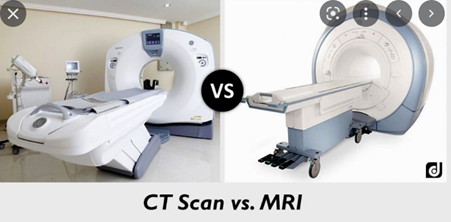
| CAT or CT scan (Computerised Axial Tomography) | A machine that uses x-rays and a computer to produce three dimensional (3D) images of the inside of the body | Your parent lies flat on a table. The table moves through a large donut shaped tube while lots of x-rays are taken | CT scans do not hurt as the machine does not touch your parent. |
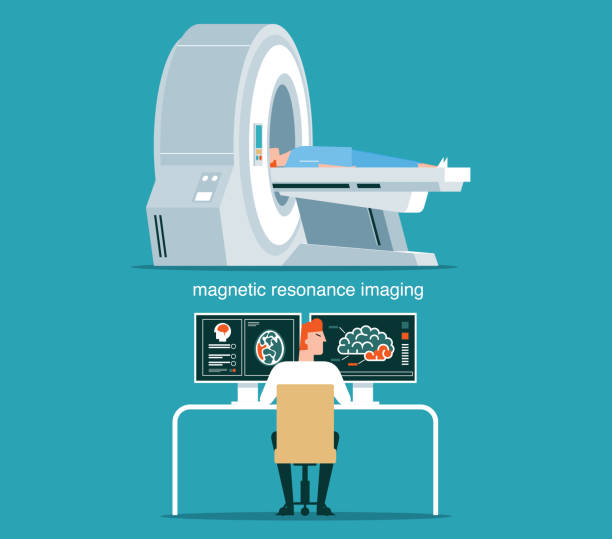
| MRI (Magnetic Resonance Imaging) | A machine which uses radio and magnetic waves to make images of organs and other tissues inside the body. | Your parent lies flat on a table. The table moves through a large tube while the machine scans the body for several minutes. An MRI is useful for seeing the brain, spine and inside of bones. | MRI scans do not hurt as the machine does not touch your parent. It can be loud and feels like you are in a small space, like a cave. |
| EEG (Eelectroencephalogram) | A machine that records tiny, ever changing electrical signals coming from to brain | Your parent will have electrodes placed on the scalp which helps to create a ‘map’ of the brain activity | |
| PET (Positron-Emitting) | A machine that measures energy (through glucose) within brain tissue | Your parent will put their head under a large Geiger counter that is able to find areas that are not using much energy | |
| Surgery Also called an operation | Helping any blood that comes out of blood vessels and into the brain tissue or fluid spaces | A doctor operates to stop any blood going to areas it should not be going into. Drugs are used so that your parent is asleep during the surgery. | Pain after the surgeryFeeling tiredOther changes depending on where the blood was and how difficult the operation was |
| Lumbar Puncture (LP) (also called a spinal tap) | A test where fluid from the spine is taken out and looked at under a microscope | Your parent will lay on their side while the fluid is taken out by a needle that goes into the lower back | Your parent may be uncomfortable. Medicine gets put into the area to stop most of the pain |
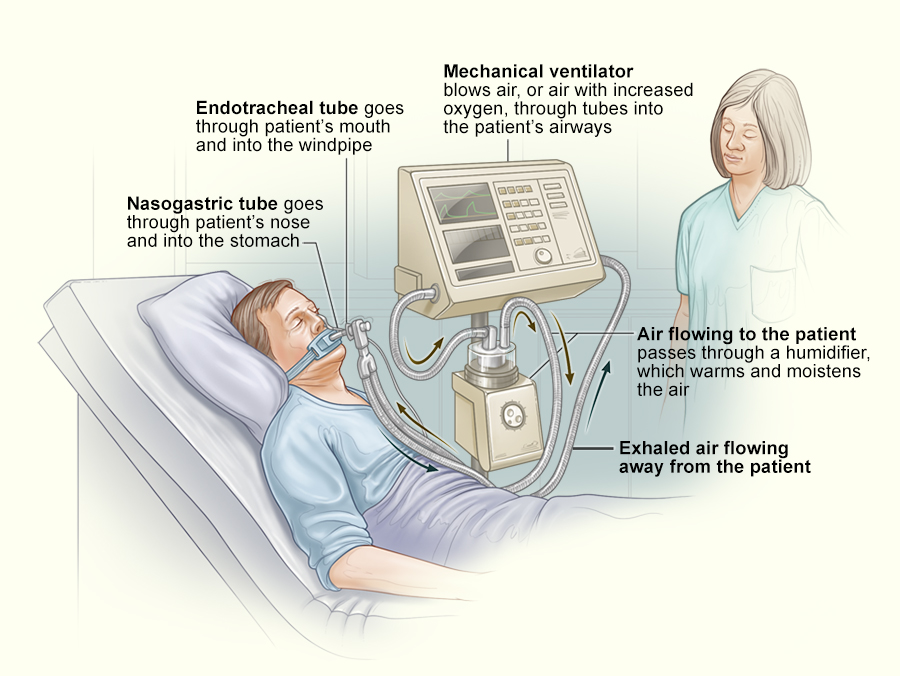
| Ventilator | A special machine to help your parent to breathe by putting air into, and out of their lungs | A mask put over the mouth and nose, or a tube put into the mouth which goes down the throat | Your parent will look asleep and will not feel any pain |
| Drip | A bag of liquid that drips down a tube which goes into the arm. The bag is often on a silver pole next to the hospital bed | A drip may be used to help with hydration or to deliver medicine in a safe way, put into the vein by an injection | Your parent will feel a prick on their skin and the needle will be stuck down to their skin so it does not pull or hurt |
| Blood Pressure (BP) machines | A machine that checks how quickly your parents heart is beating or how much air they are breathing | A velcro cuff is put onto the upper arm, or an electric finger peg is put onto any finger | A BP machine does not hurt, it feels like your arm or finger is being squeezed |