
Personal stories
Hearing from other teens who have been where you are can help. Watch their stories below.
Jack
Jack was 17 when his mum had a brain injury. Listen to his story below.
Sam
Sam was 14 when his mum had a brain injury. Listen to his story below.
Bella
Bella was 12 when her dad had a brain injury. In the video below, she reflects on her journey over the past 6 years.
Would you like to submit your own story? Let us know
Share your story
Gather – Check – Practice – Decide – Talk
An important part of coping with your special person’s brain injury is to understand what happened.
It is normal to have friends, teachers, family members and other people ask you about it.
Understanding everything that has happened can help you to tell your version of the story.
Remember:
- It is up to you to decide if, when and how you would like to share your story
- You don’t need to tell people your story just because they asked
- You may decide you only want to tell parts of your story. You can pick and choose the parts
Gather
Use the questions below to gather what information you currently know about what happened:
- Who is the story about?
- When did the injury happen?
- Where did it happen?
- What happened to them?
- How are they now?
- Where are they now?
- How could people help you?
Check
Now that you’ve considered what you know, you can check the information with your family, or staff at the hospital. Checking helps to fill in any gaps and make sure you have the correct information.
If your story includes other family members like siblings, it’s good to check if they are comfortable with you sharing any information about them. Remember, not everyone may like to share the same amount of information and that’s ok.
As time passes, your story may change as you learn more about brain injury, the changes to your special person and your family, and what it all means for you.
Practice
Talking about your special person’s brain injury can be really hard.
It might help to practice telling your story with someone you trust – like a friend, family member or counsellor. That way, you may feel more confident and prepared when others ask you about it.
Decide
It’s important to have people in your life you can count on and trust.
You might trust different people for different things, like keeping you safe, listening when you’re upset, or celebrating the good moments with you.
Try making a list of people in your life, like close friends, teachers, coaches, caregivers, cousins, or other family members. Then, create a trust ladder by placing their names into levels, from those you trust a little to those you trust a lot. This can help you figure out who to turn to when you need support.
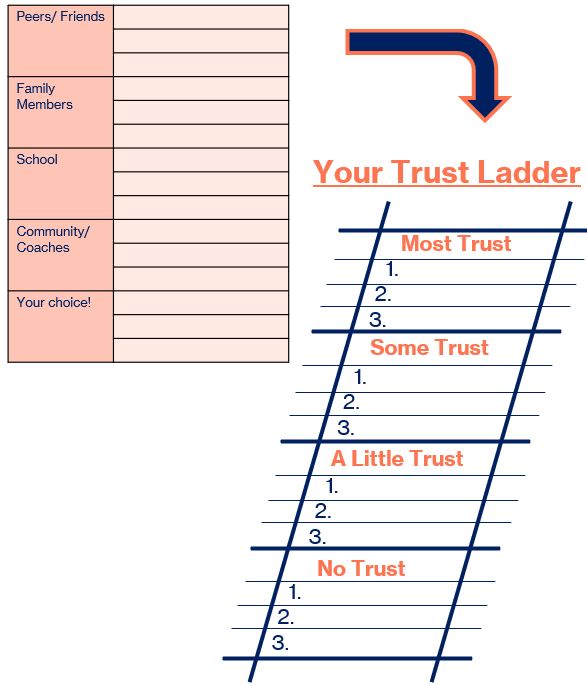
No trust = tell nothing
The people at the bottom of the ladder are the people you trust the least. They bay be the people that you decide not to tell your story to.
A little trust = tell nothing or a little
The people in this part of the ladder you trust a little so you may choose to tell them nothing, or just a little bit of your story.
Some trust = tell a little or some parts only
The people in this part of the ladder might be the ones you tell a little or some parts of your story to.
Most trust = tell the whole story
The people at the top of the ladder are the people you trust most. They might be the ones you tell your whole story to.
Talk
Remember it is up to you to tell your version of the story, whenever you are ready and feel ok to do so. You may find the same questions come up, and others may be surprising. If you are not sure what to say, you could say:
“I wouldn’t like to talk about that at the moment”
“I’m not ready to talk about that so I will let you know when I am”
“That’s a hard question, let me think about it”
“Can you ask me later?”
“Thank you for asking. I’m still working through it all right now”
“I’m keeping that information private”
What else could you say?______________________________