Arteriovenous Malformation (AVM)
Fast facts
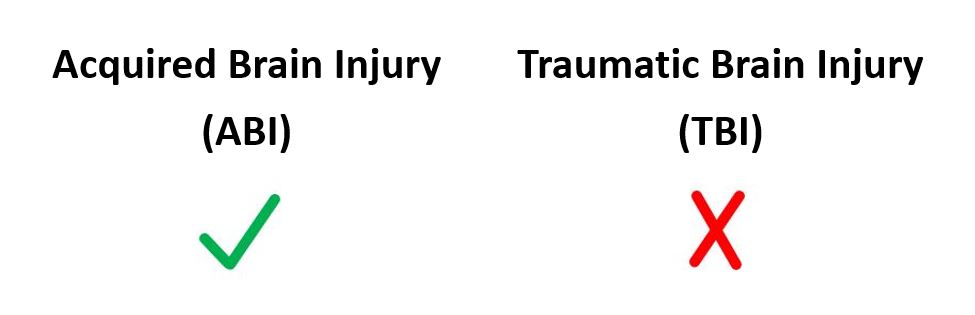
What type of brain injury is an AVM?
- An AVM is a tangle of abnormal blood vessels in the brain
- The blood vessels can get weak and rupture
- An AVM can cause bleeding in the brain (also called a haemorrhage), stroke or brain damage
- Causes of AVM’s is not clear
- An AVM looks like a birds nest
What is an AVM?
An AVM is a complex tangle of abnormal blood vessels that connect veins and arteries in the brain. The tangle is made up of veins that drain oxygen-depleted blood from the brain (back to the lungs and heart) and arteries that take oxygen-rich blood to the brain (from the heart). An AVM disrupts this vital process that takes place in capillaries which are small blood vessels that connect arteries and veins, resulting in high blood flow, leading to ischemia (restricted or reduced oxygen to the brain). An AVM can lead to intracranial haemorrhage (bleeding anywhere within the skull including brain tissue or meningeal spaces).
An AVM is pronounced “Aa-teeuh-ree-ow-vee-nuhs Mal-faw-may-shn”
Symptoms
Symptoms vary depending on where the AVM is. Often the first symptom appears after bleeding occurs, and can include:
- Loss of neurological function over time
- Headaches
- Seizures, with or without loss of consciousness
- Nausea and vomiting
- Vision problems
- Changes in thinking
- Paralysis in one part of the body
- Weak muscles
- Numbness or tingling
- Loss of coordination
- Confusion
- Problems with speech and memory
Risk Factors
The people most likely to have an AVM are:
- Typically found in people aged 20-40 years of age
- Risk of symptoms highest in people aged 30-50 years of age
- Anyone can be born with an AVM
Testing and Treatment
AVMs are often detected through imaging tests which may include:
- MRI =Useful for detecting aneurysms, particularly in the brain.
- CT Scan =Provides detailed images of the blood vessels and can help detect aneurysms in various parts of the body.
- Catheter angiography =Involves using a contrast dye to visualize blood flow and identify aneurysms.
Goal of treatment is to reduce the potential of bleeding or make it permanently go away, so may include:
- Surgery to remove the AVM
- Embolization, a procedure to insert a catheter into an artery to slow or stop the blood flow through the AVM, followed by surgery when safe to perform
- Focused radiation, highly focused beams of radiation to shrink or dissolve an AVM