Supporting Child Relatives
When you are raising children and have a special person who experiences a brain injury, it can be very difficult to cope with the competing demands. You will likely find yourself trying to be everything to everyone.
For children, when a brain injury affects someone in the family – a parent, sibling, grandparent, or other familial relationship – it can be a confusing and frightening time.
Relationships and family roles change. Children can have strong emotional responses and can feel isolated from peers. They can find it difficult to find the words to explain how they feel, know who to talk to, or where to get extra help from.
As a parent, caregiver or family member, you play a crucial role in helping your child understand what’s happening and providing the support they need to navigate these changes. By providing your child with understanding, reassurance, and opportunities to stay connected, you can help them navigate the impact of a brain injury with resilience and hope.
Should I…?!
Yes.
Children are perceptive to change and what is going on around them. Children can believe they did something to cause the injury and are perceptive of adults sadness and distress. Without information, children’s imagination can take over which is often more distressing than the truth.
Honest communication helps alleviate fear and uncertainty, allowing children to process their emotions and ask questions. Explaining the changes and challenges associated with the brain injury can also foster empathy and patience, helping children adjust to new family dynamics. Keeping children informed helps them feel included and supported, reducing feelings of isolation and anxiety. While these conversations can be difficult, they are essential for maintaining trust and fostering a resilient family environment.
Meet Bella
Bella was 12 years old when her Dad had an acquired brain injury.
In this video, Bella talks about the importance of adults telling kids what is going on with their special person.
What children need during times of stress
- Contact with a parent or other close relative
- Simple, age-appropriate and honest explanations of what happened and what is happening, with regular updates
- Reassurance and physical comfort
- Consistency in routines and limits around bedtime, attending school, meal times, food choices, maintaining rules and expectations of behaviour
- Special time just for them, without ongoing discussion or reference of what’s happening (read a book, do a project together, have a meal together)
- Time to talk about or play about their thoughts, feelings and experiences
- Inclusion in family to help in feeling like they are part of what is happening
- Reassure them that their special person is receiving care, the injury is not their fault, and they are safe
Communicating with children
Starting the conversation
Given the unexpected nature of a brain injury, you will likely start a conversation with children in the early stages after the injury happens. For children, this will come out of the blue so find a time and location where you will be uninterrupted. Keep information honest, brief and understandable. Being honest does not mean telling children every detail. Plan what you want to say. Tell them what happened and what part of the body is affected. An example might be:
Adult: “Dad was in an accident and hit his head. He is in hospital getting help”
Child: “Is he going to be ok?”
Adult: “I hope so. His brain has been hurt. He’s getting help from staff right now”
Child: “When will he be home?”
Adult: “I don’t know yet. I’m finding out as much information as I can”
The above example provides a cause for the brain injury and introduces the concept that the brain has been hurt. A brain injury can then be referred to when particular symptoms occur in the future and need to be explained further:
Child: “Why doesn’t Dad remember my name?”
Adult: “Remember that Dad hurt his brain. This is called a brain injury. A brain injury makes it harder for him to remember things”
Common questions from children
- What happened?
- Where are they now?
- When will they come home?
- Will they die?
- When can I go and see them?
- Will I get one too?
- Will other people in my family get one?
- Can I catch a brain injury?
What if my child doesn’t have any questions?
Questions to ask that can help children talk are open ended questions like:
- ‘What kind of questions do you have?’ is very different to ‘do you have any questions?’
- What do you think will happen?
- What are you worried about?
- What words have you heard?
- What do you think they mean?
- How do you feel about what happened?
- If you’re concerned about a certain behaviour, you could ask “I’ve noticed that you’re not eating much lately, and that’s not like you. I think there is something on your mind…”
What if I get it wrong?
Don’t panic, making mistakes is common and ok. You don’t need to get things right all the time as remember, no one’s perfect! Learning about brain injury and talking to your children can be difficult so if you get things wrong, reflect on what happened and what you might do differently next time. The main thing is to be honest.
Explaining brain injury to your child
Understanding a brain injury can be difficult for anyone, especially children. Here are some tips to help explain it to them in a way that is clear and reassuring:
- Use simple language: Avoid medical jargon or words they do not understand. Explain that the brain is like an engine for the body. When there is an issue with a car engine, it won’t run smoothly. The brain is the same. When a brain gets hurt, it has difficulty sending messages around the body which can make it hard for the person to do things they used to do easily.
- Be honest: Share age- and developmentally-appropriate information about the injury and what it means. Children need to know what to expect, even if the news is difficult.
- Encourage questions: Let your child ask questions and answer them as honestly and simply as you can. This helps them feel more in control and less anxious.
Common reactions in children
Children may react to a special person’s brain injury in various ways. Here are some common reactions and how to handle them:
- Fear and anxiety: Reassure your child that it’s okay to feel scared and that you’re there to support them. Any where, any time.
- Anger or frustration: Acknowledge their feelings and provide outlets for expressing them, such as drawing or talking.
- Sadness and withdrawal: Encourage your child to share their feelings and spend quality time together to help them feel connected and supported.
Everything hospital
Deciding if your child should visit hospital
Visiting a hospital can be overwhelming for an adult so careful thought should be given to decide if and when it is appropriate for your child to visit. A visit to a hospital can be many things:
- Eating in the cafe with family
- Playing in a playground at the hospital
- Being present in the waiting room with family
- A visit by the bedside
Questions to ask yourself before a visit:
- What is the goal of the visit?
- What are the ages of the children visiting?
- What do they know about the hospital? What do you think they understand?
- How does your child usually handle stress (are you seeing any signs of that now)?
- What do you think your child’s ideas are about what their special person is like right now? What do you think is worse – their ideas or reality?
- How did your child learn that their special person was in the hospital? Did they witness anything difficult or see them leave in an ambulance?
What to consider before planning a hospital visit?
Check with staff before you visit.
Never force a child to visit. If they don’t want to visit, give them alternatives like making a card or poster, write a letter, record a message or create a music playlist.
Consider using photos to prepare for the visit as it can assist in preparing them for what they may see. Give them time to talk about what they see in the picture and ask questions before going into a hospital room.
Try to help your child know in advance, what they might see and hear in hospital:
- Describe the hallways (other patients, family’s visiting, people in wheelchairs or beds, nurses, doctors)
- Describe changes in the special person’s appearance
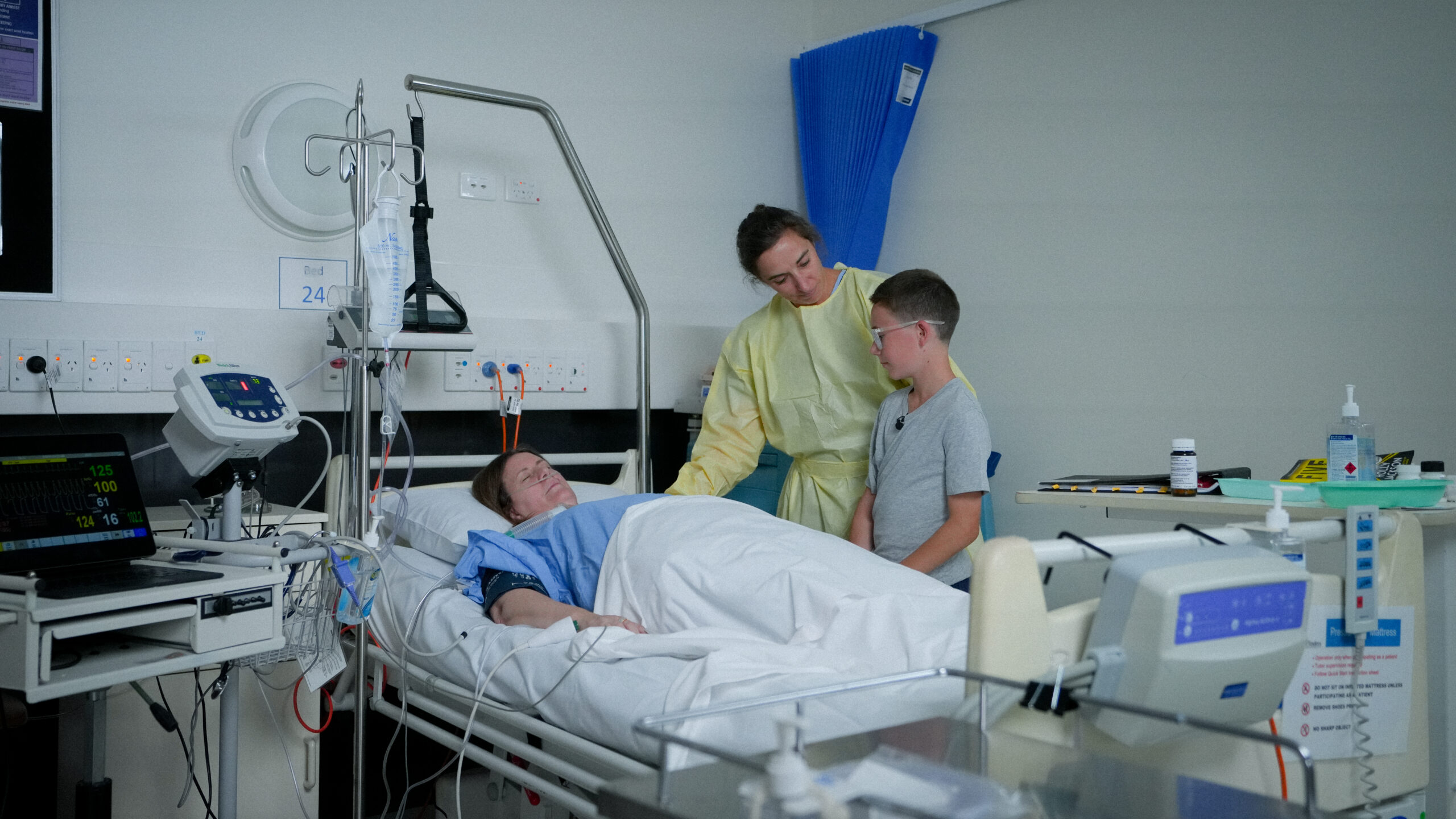
- Describe the machines and any tubes going into the person, and what they all do
- Describe the different sounds they will hear (machines, alarms beeping, blood pressure cuff inflating)
- Describe who they may meet or see in the room
Preparing a child for a visit to hospital
It’s important to prepare your child so nothing is left up to the child’s imagination “your special person is not able to breathe on their own right now so they have a tube in their mouth that is helping them”. Encourage brief visits and tell the child in advance, how long they may stay for and that they can leave at any time. Short visits in the Intensive Care Unit (ICU) of 5 minutes are recommended, to start, and the time can be extended for the benefit of the child visiting.
Help the child know what they can do at the bedside. Having concrete tasks to do during the visit will help ease possible discomfort of wondering what to do once they get to the bedside and will give the child a focus so consider tasks like:
- Holding the special persons hands
- Put up their picture or card
- Play some of their favourite music
- Talk to the special person
- Read a short book to the special person
- Sing a song
Before entering the special person’s room
- Plan the visit with nursing staff to help identify the best time of the day to come
- Cover the special person as much as possible with a blanket when your child first comes into the room
- Consider what your child can see at their height and view point. What they can see can be very different to adults
- Encourage the child to talk and ask questions throughout the visit. You may need to start this conversation. It’s ok if you don’t know the answer to any of their questions. Role model for your child by asking nursing staff to explain information
During the visit
- Let your child decide how close they would like to get to the bedside after entering
- Do not force your child to do anything they are not comfortable doing
- Take note of your child’s body language to monitor how they are going. If you sense they are uncomfortable, offer to make the visit shorter or end it early
- Taking a photo of the visit can be something your child takes home as they process the visit. A photo can also add to their sense of togetherness. You could print this photo and put it by the special person’s bedside to demonstrate to your child the importance of their visit
After the visit
- Take time to debrief and talk about the visit with your child
- Was the visit easier or harder that the child thought it might be?
- Was the hospital room what they imagined?
- Was their special person the way they imagined? If not, what was different?
- Would they like to visit again? If so, would they change anything?
Suggested explanations for medical equipment
Central line
A small tube that is placed in a big vein to help give fluids, medicine or withdraw blood.
Chest tube
A straw placed in the chest to take away any air or fluids from the lungs to help the special person breathe better.
Monitor
A machine that looks like a TV. It helps the doctors and nurses to see how the special person’s body is working. On the screen, there are lines and numbers that show what the special person’s oxygen level is, how fast their heart is beating and other information that is helpful for the staff to know when they are taking care of them.
NG (nasal gastric) tube
Is like a soft straw that goes into the special person’s nose and down their throat to the stomach to help the stomach stay empty and rest while the body is working to get better, or to give the body tiny bits of food a drip at a time which helps the body to not have to work so hard.
Tracheostomy
A tube that goes into the neck that helps the special person to breathe in a different way by taking air in and out of their lungs.
Ventilator/Respirator/Breathing Tube
This machine helps the special person get enough air in and out. It helps them to have good, deep breaths and get plenty of air while they are asleep, so the special person’s body works hard to get better.
Developmental considerations
Children’s development plays a big part in how they understand and process events and information.
Preschool children (up to 6 years)
- Believe their thoughts, actions or wishes caused the brain injury
- Spend time learning what your child believes made their special person injured, then address any basis for unnecessary guilt “Lots of kids think that, but it is not what happened”
- Fear that a brain injury will happen to them too. Reassure the child that brain injuries are not contagious
- If their special person was involved in a trauma, ask what can be done to prevent that kind of accident
- The child may feel anger or a sense of abandonment with separation from the special person and the non-injured parent. They may believe they deserve punishment or that further abandonment will happen
- Ask questions like “how has it been for you while we/I/family spend time at hospital? Validate, acknowledge and accept their feelings
- Tell the child what each professional does “The doctors job is to stop the hurting”
- Use pictures of the body and the internals to increase their understanding of how it works. Ask your child to draw what they think or imagine
School-aged children (6-12 years)
- Wonder if something they did caused the brain injury “If I had done something differently, this wouldn’t have happened”. Ask “what makes you think that?” Explain “lots of children think that, but it is not what happened” Give concrete examples such as “if you wished this pen to write, could you make it happen?”
- Worry they can ‘catch’ a brain injury and may not want to touch or go near the special person. Ask “do you think you can catch this from touching them?” Explain “I wouldn’t let you touch them if that would happen. We know you can’t catch a brain injury”
- Wonder if the special person will be the ‘same’ so you could respond with “we hope so”, “they need lots of help and time to get better”, “I am not sure if all the parts of their body will work the same way. I hope they will”
Adolescents (13-17 years)
- It is likely they are thinking about the special person even if they don’t tell you
- Offer times to ask questions or share what they may be wondering about
- They will likely have a sense that they are being ‘watched’ so provide privacy, as appropriate and ask if they prefer to be alone or have family or staff close by
- Help them to share what they know about the special person and learn from them, what they love to do with them, their likes and dislikes
- They may talk in complex terms or medical jargon, but not truly understand what the words mean. Ask what they understand about events and conversations. Reassure them that there are adult’s who don’t understand many words or phrases.
- Ask “what does that mean to you?” if they use big words
Support and Connection
How to provide support
Supporting your child through a special person’s brain injury involves both emotional and practical steps:
- Maintain routine: Keeping a regular schedule helps children feel more secure during uncertain times, such as attending school, sport and keeping to meal routines and bed times.
- Offer reassurance: Remind your child that the medical, nursing and allied health team is working to help their special person recover.
- Promote open communication: Make sure your child knows they can talk to you about their worries and feelings at any time. Make special time to talk and set clear boundaries so they do not take on parenting roles.
- Use encouraging statements: In conversations with your child, use encouraging statements such as “you’re asking fabulous questions” or “that’s a really clever question”
- Privacy: Ensure your child has privacy, especially when carers or health workers are coming into your house.
- Keep doing normal activities: Encourage normal activities such as seeing friends after school, keeping up hobbies, attending school excursions and having fun! Encourage your child to invite their friends over.
- Celebrate special occasions: Keep celebrating birthdays, name days, significant religious events or events that are important to your child.
- Make use of the good days: Do something fun with the family and spend some quality time together, like go on an outing, go to your local playground, or play a game.
- Connect to supports: It could be helpful to ask a parent of a school friend to help you keep track of special events, school excursions and class projects if you are finding it challenging to stay on top of everything.
- Developmentally-appropriate information: Direct your child to Brain Connects age-appropriate educational pathways which you can find here.
Helping your child stay connected
Staying connected to the special person is important for your child’s emotional well-being. It is also important for you to spend time with your children if you are visiting hospital a lot. Here are some ways that you, and your special person, can stay connect to your child(ren):
- Visit when possible: If it’s appropriate, arrange for your child to visit the hospital or rehabilitation centre and get involved, as appropriate.
- Use technology: Video calls, photos, and recorded messages can help maintain a sense of closeness. Use the internet for facetime calls, or for the child to read their favourite story over the phone. You could also send them a recorded video message.
- Involve them in care: Simple tasks like drawing pictures or helping with small activities can make your child feel involved and useful. Take the lead from your child regarding the level of care they would like to provide.
- Exchange photos: Take photos of what you are doing in hospital so they can see how their special person is, and what they/you are doing, and vice versa.
- Set phone calls: Have a set time for the child to call each day.
Heading home
Returning home from hospital will bring some big changes to the way your family operates day-to-day. Preparing children for these changes is important, even if your children do not live with you all the time. Consider discussing:
- Changes to physical environments (ramps, hand rails, moving of furniture)
- Any changes or considerations to having friends come over to the house
- New routines, especially at the start and end of the day (extra time to get ready in the morning)
- Having external support workers in the home to help with any care and support the special person needs
- Any additional people coming and going from the house such as allied health therapists (physiotherapist or occupational therapist)
- Changes to your car to support a wheelchair or car transfer abilities
- Equipment that may take up room in different areas of the house, especially shared areas
- How to use equipment in a safe and controlled way (moving a wheelchair or lifter)
- Set boundaries for any care provision that your child may be providing so they do not formally take on a caring role assigned to professional supports or other adult relatives
When to seek further support?
Your child will experience a range of different, strong emotions. It’s important to recognise signs that your child may need additional support such as a social worker, school counsellor or psychologist. Signs might include:
- Low mood
- Sleeplessness and nightmares
- Regression of behaviours (bedwetting or thumb sucking)
- Aches and pains (headaches or stomachaches)
- Intensified anger and aggressive outbursts
- Difficulty concentrating
- Difficulty trusting others or forming attachments
- Low motivation
- Social withdrawal or isolation
- Refusal to go to school or to engage in routine activities over an extended time
- Increased risk-taking behaviours such as sexual experimentation, drug or alcohol use
- Suppressing emotional distress while displaying excessive resilience
Resources and activities
Brain Connect offers various resources to help your child understand and cope with a special person’s brain injury:
- Interactive learning: Engage with our interactive activities designed to teach children about the brain and its functions.
- Stories and videos: Watch videos and read stories from other families who have experienced similar situations.
- Support groups: Join online support groups where you and your child can connect with others going through similar experiences.
Looking after yourself
Remember, your well-being is crucial too. Taking care of yourself helps you better support your child. By looking after yourself, it ensures you do not take on too much. Try and enlist the help of others. People close to us want to be able to help but sometimes, they don’t know how so it’s important for you to communicate how assistance can help you.
- Seek support: Don’t hesitate to reach out to friends, family, or professional counsellors for support.
- Give people specific tasks: If you know what you need, communicate this to people who are close to you.
- Practice self-care: The physical and emotional demands can be high, take time and energy. Make time for activities that help you relax and recharge.
- Take a break: Taking a break is crucial. It’s ok to not attend hospital every day or provide care across 24/7. Taking a break means you can have a rest, go out, connect with friends or go on a holiday. Having something to look forward
Resources for children
Resources
Listen With Your Heart: Helping Kids Understand Stroke and Aphasia
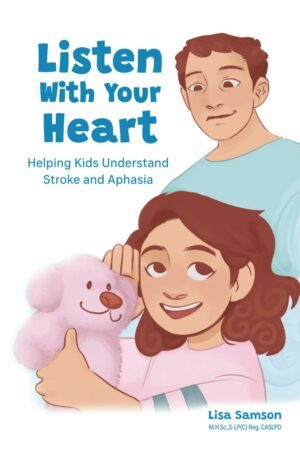
Sam and Pink Puppy are awaiting Dad’s return from the hospital, following his stroke. Everyone is excited but also a bit nervous. Sam does not understand why everything feels different now. Join Sam, Pink Puppy, Mom, and Dad as they learn about stroke, aphasia, and new ways to communicate.
This book supports children and caregivers in understanding and exploring some of the difficult life changes that can arise after stroke and aphasia. You will find discussion questions and conversation starters to help you engage in these challenging topics.
For children of all ages.
Small cost to purchase.
Available via Amazon
The get around

Taylor and Dad’s favourite thing is to go adventuring – they love camping, exploring and hiking. Then Dad has an accident, and everything changes. Dad is different. Life is different. Are there ways to get around the many changes and do the things they love again?
For children aged 4 to 8.
Free resource.
Available via Brightwater
My parent has a brain injury: a guide for young people
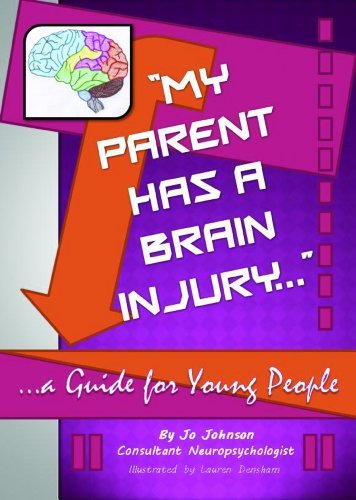
This book helps sons and daughters understand the physical, cognitive and emotional changes in a parent after an acquired brain injury due to trauma, stroke, tumour, disease or anoxia. It gives information about the brain that is clear and easily understood among elementary, middle and high school age children. Most importantly, it helps sons and daughters understand how and why their relationship with their injured parent has changed. Filled with quotes and exercises, children share their personal feelings about living with a parent who has a brain injury and what life is like at home. This honest and insightful book with colourful graphics is an essential tool to help children cope.
For children of all ages.
Small cost to purchase.
Available via Amazon
Resources for adults
Helping children and adolescents when a parent has a brain injury: a guide for parents, caregivers and professionals
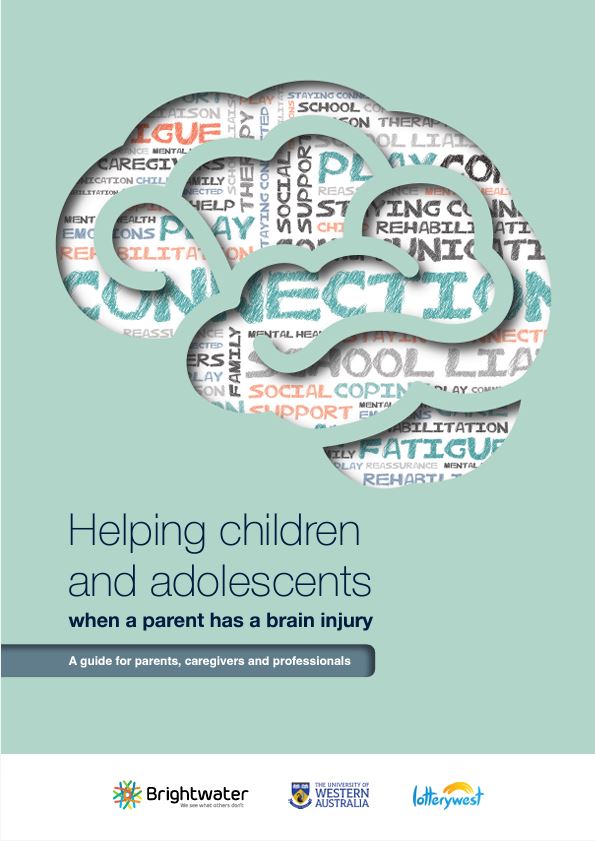
This guide has been written by Brightwater to help parents and caregivers understand and respond to children when a parent has had a brain injury.
Free resource.
Available via this link.
Resources for children, adolescents and young adults with a parent who has a brain injury
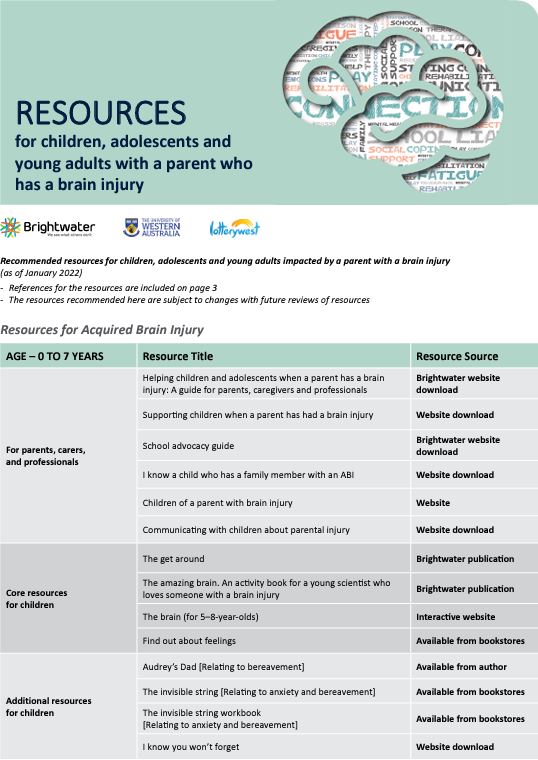
This 4 page document written by Brightwater lists resources suitable to children of all ages.
Free resource.
Available via this link.
Parenting after brain injury
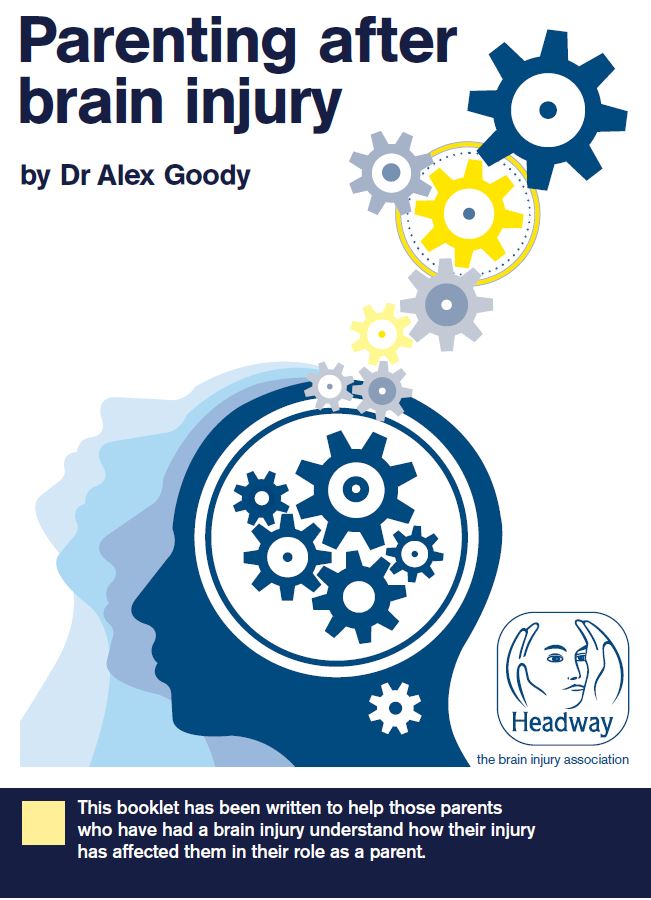
This 40 page document written by Headway was written to help parents with a brain injury understand how their injury has affected them and their role as a parent.
Small cost to purchase.
Available via this link.